Meta-analysis of bone morphogenetic protein 2
Abstract
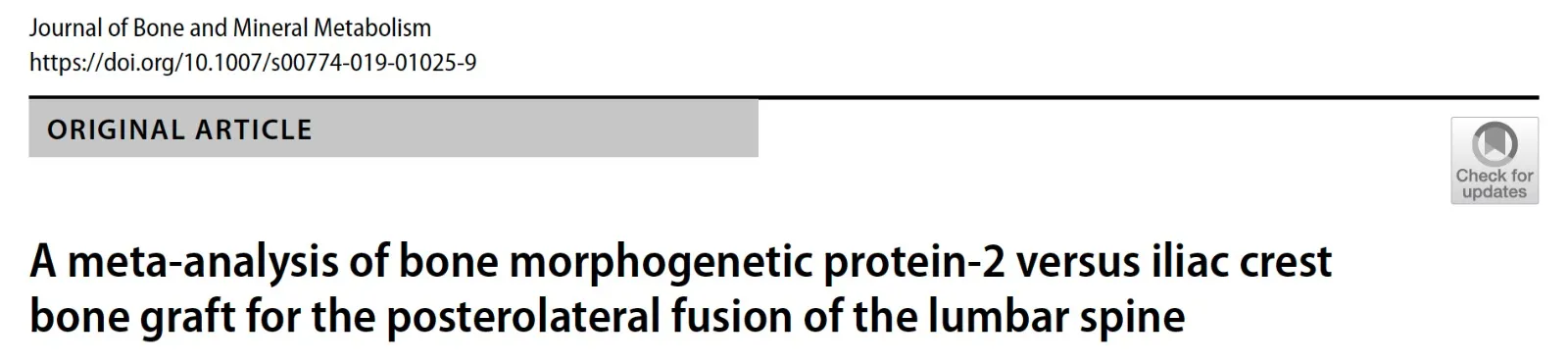
The impact of autologous iliac crest bone graft versus BMP-2 to improve fusion rates for posterolateral fusion (PLF) of the lumbar spine remains unanswered. Single-institution-centered data dominate the literature, providing results that may be contradictory or inconclusive. The aim of this paper is to analyze data pooled from multiple well-controlled studies that examined both ICBG and BMP-2 for use in PLF. This meta-analysis also provides details of success in different subsets of patients with variable risk factors for delayed and non-unions. Six high-quality randomized clinical trials were selected. Efficacy, morbidity, quality of life, and safety were compared between the BMP-2 group and the ICBG group. A total of 908 patients were included in the study. At 24 months, 94% of patients achieved fusion in the BMP-2 group and 83% in the ICBG group. At 6 and 12 months, the fusion was also greater in the BMP-2 group (86% vs. 60% and 88% vs. 80%, respectively). Surgical time, intraoperative blood loss, and hospitalization days also showed significant differences in favor of the experimental group (p < 0.01). There were no differences between two groups in the Oswestry Disability Index, 36-Item Short Form Health Survey and Back Pain Score, whereas a greater number of additional surgical procedures were performed in the ICBG group (p = 0.001). In conclusion, the use of BMP-2 in PLF reduced the surgical morbidity and had more beneficial effects on the fusion rate. The quality of life based on clinical scores was the same in both groups.